

Advanced & Recurrent Lung Cancer Treatment in China: Multidisciplinary (MDT) Precision Assessment
Focused on driver-gene resistance mutations in non-small cell lung cancer (NSCLC), transformed or relapsed small cell lung cancer (SCLC), and refractory locally advanced lesions. Through a multidisciplinary specialist network spanning the National Cancer Center of China, Sun Yat-sen University Cancer Center (SYSUCC) and leading public Class-A tertiary hospitals, we deliver coordinated strategies that cover large-panel molecular subtyping for drug resistance, novel bispecific antibodies and ADC-based immunotherapy, and precise thoracic stereotactic radiotherapy (SBRT / proton & heavy-ion therapy).

Remote Lung Cancer Case Assessment: Requirements & Admission Criteria
Patient data handling follows strictly compliant encryption under international HIPAA and China's Personal Information Protection Law (PIPL)
Clinical Eligibility Scenarios & Contraindication Red Lines
Cross-border oncology referral must rest on extremely rigorous physiological tolerance and an evidence-based benefit ratio. MedTravel China insists on scientific triage and will never send patients on unnecessary, futile international journeys.
Disease Progression After EGFR-TKI Resistance
Resistance to first- or third-generation EGFR-TKIs (e.g., presenting with a C797S mutation, MET amplification or HER2 mutation; or progression on ALK inhibitors. A comprehensive repeat liquid or tissue biopsy is required to evaluate the feasibility of next-generation (fourth-generation) targeted drugs, combination targeted regimens or bispecific antibodies.
Locally Advanced Inoperable or Multiple Oligometastatic Disease
Stage III unresectable lung cancer seeking curative concurrent chemoradiotherapy followed by consolidation immunotherapy (the PACIFIC pattern); or stage IV disease with a stable primary tumor plus one to three brain, adrenal or bone oligometastases, seeking SBRT stereotactic ablation combined with maintenance systemic therapy for long-term survival with the disease under control.
Extensive-Stage SCLC & Transformation
Extensive-stage SCLC that has relapsed after first-line platinum plus etoposide and a PD-L1 inhibitor; or NSCLC that has transformed into small cell lung cancer after targeted therapy. We seek rescue options with novel DLL3-targeting bispecific antibodies, topoisomerase inhibitors or ADC therapy.
Complex Rare-Mutation Molecular Diagnostics
RET fusions, ROS1, BRAF V600E, HER2 mutations, KRAS G12C/G12D, NTRK, or EGFR exon 20 insertion mutations. When patients' home countries offer no access to a specific targeted drug, we assess the availability of new targeted therapies already approved and marketed by China's NMPA.
To protect the patient's absolute safety, you must not set off for China blindly under the following conditions: (1) ECOG performance status of 3 or higher (extremely weak, bedridden more than 50% of daytime hours, or completely dependent for daily care); (2) extensive active brain edema, severe intracranial hypertension, or acute risk of cerebral herniation (cabin pressure changes at altitude can cause irreversible, life-threatening harm); (3) major hemoptysis within the last 14 days, or moderate-to-severe respiratory failure requiring high-flow oxygen therapy; (4) refractory severe infection, or severe acute cardiac or renal failure. In such situations, emergency supportive care at the nearest local hospital should come first; cross-border referral may only be considered after vital signs are stabilized and the patient has been reassessed.
Four Core Clinical Decision Pillars for Advanced Lung Cancer
With extremely high case volumes, fast drug approvals and mature multidisciplinary collaboration systems, China's top public cancer centers stand at the global frontier of complex lung cancer management.
Deep Next-Generation Sequencing (NGS) & Complete Resistance Molecular Profiling
China's national key laboratories deliver 500–1,000+ gene large-panel deep sequencing, ctDNA liquid-biopsy tracking from blood, and single-cell sequencing. They sensitively capture bypass activation (MET/HER2/AXL amplification), on-target secondary mutations (C797S/G1202R), and molecular phenotypes of adenocarcinoma transforming into squamous or neuroendocrine carcinoma — providing unshakable molecular evidence for precise later-line therapy.
- Dual cross-validation of tissue sections and circulating tumor DNA (ctDNA) in peripheral blood
- Minimal residual disease (MRD) monitoring for ultra-early relapse detection
- Precise resolution of fusion-gene breakpoints and copy-number alterations
Fast Access to New Targeted Therapy Drugs, Bispecific Antibodies & ADC Agents
Accelerated approvals by China's National Medical Products Administration (NMPA) have quickly brought third-generation EGFR-TKIs (aumolertinib, furmonertinib), newly launched ALK inhibitors, the globally leading PD-1/CTLA-4 bispecific cadonilimab, the PD-1/VEGF bispecific ivonescimab, and Trop-2/HER2 antibody-drug conjugate (ADC) agents into routine standardized use — offering a precious rescue opportunity to many patients who have become resistant after later lines of therapy.
- Abundant originator and compliantly approved drugs, dispensed through regulated hospital pharmacies
- Breakthrough bispecifics such as ivonescimab used together with multi-target anti-angiogenic therapy
- Strict prescription review ensuring rational drug use and stepwise adverse-event monitoring
Precise Thoracic Ablative Radiotherapy (SBRT / Proton & Heavy-Ion Synergy)
For early-stage or locally advanced patients who cannot tolerate open surgery, or oligoprogressive lesions — only one to three isolated sites advancing during targeted therapy — we use respiratory-gated, 4D-CT-guided stereotactic body radiation therapy (SBRT) or proton systems in the Greater Bay Area / East China to deliver lethal high-dose radiation at millimeter precision while maximally protecting healthy lung parenchyma and the heart.
- No general anesthesia; treatment completes in a single outpatient session or a short hospital stay
- Ablates resistant clones and extends the effective control time of systemic targeted therapy
- The Bragg-peak physics of protons greatly reduces the rate of radiation pneumonitis
National-Level Thoracic Oncology MDT & Multidisciplinary Expert Consultation
We go far beyond the limits of any single department. For difficult, complex cases, a dedicated MDT panel — lead thoracic surgeons, chief respiratory oncologists, radiation oncology directors, molecular pathology experts and diagnostic radiology directors — repeatedly rehearses the case against imaging and molecular targets before sequencing surgery, chemoradiotherapy, targeted therapy and immunotherapy into one integrated attack-and-defense plan.
- Written multidisciplinary consultation opinion signed and endorsed by the experts
- Clear first-/second-line salvage treatment roadmaps with backup contingency plans
- Explicit follow-up assessment timelines and imaging re-review protocols
Core Checklist: Medical Records & Imaging Needed for Your Assessment
To give China's Class-A tertiary experts distortion-free clinical evidence, please prepare a complete case file following these five requirements.
The histological subtype must be confirmed (adenocarcinoma, squamous cell carcinoma, large cell neuroendocrine carcinoma, small cell carcinoma). The IHC report must include TTF-1, Napsin A, P40, CK5/6, Syn, CgA and the Ki-67 proliferation index. Please provide a scanned copy of the hospital's original stamped report.
State whether the specimen was biopsy tissue or blood ctDNA. The report must completely cover the mutation status of EGFR, ALK, ROS1, KRAS, MET, BRAF, HER2 and RET, together with the PD-L1 expression percentage (TPS/CPS) and tumor mutational burden (TMB).
This includes thin-slice contrast-enhanced chest and abdominal CT, contrast-enhanced brain MRI (to rule out hidden micro-metastases), and whole-body 18F-FDG PET-CT. It must be the native DICOM data folder copied directly from the hospital disc (containing hundreds of uncompressed, high-fidelity tomographic slices).
Detail every prior line of therapy: brand and chemical names of targeted drugs used, daily oral dose, and exact start and stop dates; number of chemoradiotherapy cycles and drug combinations; the best objective response achieved during treatment (RECIST assessment); and the clinical presentation at the time resistance was confirmed.
Pulmonary function tests (FEV1, DLCO diffusing capacity), arterial blood gas analysis, echocardiographic EF value, and daily activity level as ECOG PS score — used to determine whether long-haul international travel is safe and how much physiological reserve remains for subsequent surgery, chemotherapy or radiotherapy.
Dedicated Upload Line for Large Native DICOM Files
End-to-end encrypted transfer of single compressed archives up to 10 GB
Put the CT/MRI/PET-CT disc issued by the imaging hospital into your computer's optical drive, right-click the DICOM or IMAGES folder inside the disc, compress the whole folder to .ZIP format, and upload it directly to the system.
China's Top Public Class-A Tertiary Thoracic Oncology Network
We work only with national and regional cancer medical centers and century-old public hospitals of repute, where thoracic specialists with doctoral-supervisor credentials personally lead case assessment and on-site care in China.

Sun Yat-sen University Cancer Center (SYSUCC) — Thoracic Oncology Center
One of China's foremost sources of lung cancer clinical research. World-renowned for molecularly subtyped targeted therapy of lung cancer, neoadjuvant immunotherapy, and complex difficult thoracic surgery, it has long led multiple international multicenter phase III clinical trials.
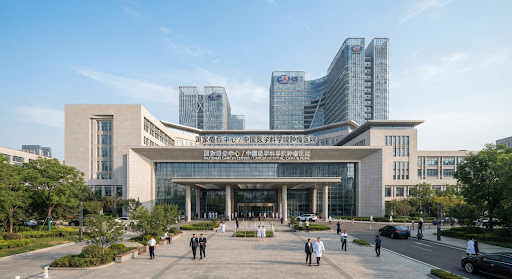
Cancer Hospital, Chinese Academy of Medical Sciences — Thoracic Oncology MDT Group
The most prestigious institution in Chinese oncology. It gathers nationally leading thoracic surgeons and respiratory oncologists, backed by a powerful chemoradiotherapy quality-control system and the capability to evaluate compassionate use and early clinical application of the newest targeted drugs.

Shanghai Chest Hospital / Fudan University Shanghai Cancer Center
Their standalone thoracic surgery and respiratory medicine volumes rank among the highest nationwide. Deep technical expertise in early screening and differentiation of small pulmonary nodules, precision stereotactic body radiation therapy (SBRT) for advanced disease, and heavy-ion and proton radiotherapy synergies.
Lung Cancer Treatment Cost Breakdown & Service Boundary Statement
MedTravel China firmly rejects any intermediary practice of “bundled mystery pricing, hidden deductions, or inflated drug prices.” Cross-border treatment costs consist of two separate, fully transparent accounts: a clear, fixed platform coordination fee, and the statutory hospital medical fees that patients settle directly by card at the hospital.
4 Objective Cost Variables of Actual Medical Spending at Public Class-A Tertiary Hospitals
Flat coordination fee for the lung cancer MDT pre-assessment and treatment-pathway planning
- check Professional clinical summarization and de-identification of complete English/native-language medical records (into Chinese medical summaries)
- check Import of native DICOM imaging into Class-A tertiary hospital workstations with quality validation
- check Written treatment-direction opinion from associate chief physicians and above in thoracic oncology at public Class-A tertiary hospitals
- check If the plan is feasible, an official hospital invitation letter is issued free of charge to support your medical visa application
MedTravel China · Medical Ethics & Anti-Fraud Red Lines for Cross-Border Advanced-Cancer Assistance
FAQs: Cross-Border Lung Cancer Treatment in China
Answers for overseas patients and families on the issues that matter most — drug resistance, safe travel, imaging formats and taking medicines home.
Q1: My lung cancer has become resistant to first-generation EGFR targeted therapy (first-generation EGFR targeted therapy) and. What options can I still get in China?
Progressing afterdoes not mean you are out of options. At China's top cancer centers, the first step is a repeat biopsy — tissue, or large-panel ctDNA sequencing from blood — to identify the exact resistance mechanism:
- If MET amplification is found: a third-generation EGFR-TKI combined with a MET inhibitor such as savolitinib can be used, significantly improving the response rate;
- If an EGFR C797S cis mutation is found: we can evaluate the investigational fourth-generation EGFR-TKIs now in clinical development in China;
- If aberrant HER2/Trop-2 expression is found: novel antibody-drug conjugates (ADCs) targeting these antigens can be added;
- If transformation into small cell lung cancer (SCLC) has occurred: the plan should promptly switch to chemotherapy combined with novel immunotherapy salvage regimens.
Q2: I have advanced lung cancer with brain or bone metastases. Can I still fly to China for treatment?
The deciding factors are your performance status (ECOG PS) and intracranial pressure:
If you have only multiple small, silent brain oligometastases — no violent projectile headache, projectile vomiting, or acute hemiplegia or altered consciousness — and your ECOG score is 0–2 (you can walk independently and feel only mild fatigue at most), flying is generally safe provided your home doctor first gives prophylactic intracranial-pressure-lowering medication such as mannitol or dexamethasone. But if you already have obvious active brain edema, midline shift, or a high risk of cerebral herniation, emergency dehydration to lower intracranial pressure or urgent radiotherapy must be done locally first — boarding an international flight under these conditions is absolutely forbidden.
Q3: Why do I need to send DICOM data on a disc? Can't I just photograph my scan films with my phone and send the photos on WhatsApp or WeChat?
Photos of scan films taken on a phone suffer from severe uneven backlighting, a sharp drop in resolution, and — most critically — the window width and level (lung window vs. mediastinal window) can no longer be adjusted dynamically. From one static phone photo, doctors cannot reliably see micro-invasive lesions under 3–5 mm, the internal blood supply of ground-glass nodules, or the architecture of lymph node hila. Native DICOM data contains hundreds or thousands of raw three-dimensional tomographic slices with high dynamic range. Chinese Class-A tertiary experts can load it into a PACS imaging system for multiplanar reconstruction, 3D rotation and precise tumor-volume calculation — the non-negotiable foundation for planning precision radiotherapy and surgical resection.
Q4: Can I legally carry the targeted therapy drugs prescribed by a Chinese hospital back to my home country for long-term use?
Under the Customs Law of the People's Republic of China and International Civil Aviation Organization (ICAO) regulations, after a face-to-face prescription from the attending physician at a public Class-A tertiary hospital, an official discharge summary, and a formal pharmacy invoice, you may legally carry the drugs out of the country within reasonable personal-use quantities (typically a 1–3 month maintenance supply). MedTravel China's entry-exit coordination specialists will help your family prepare the bilingual (Chinese-English) Certificate of Treatment and Prescription and the customs declaration documents, so your return journey is smooth and trouble-free.
Don't Miss the Window: Molecular Profiling & Precision Intervention for Advanced Lung Cancer
Submit the patient's latest native DICOM imaging (chest contrast-enhanced CT / PET-CT) and pathology reports now. MedTravel China's professional medical specialists will work with China's top Class-A tertiary physicians to map out your realistic, actionable next treatment path after resistance.
info Medical information on this site is for general reference only and does not constitute medical advice, diagnosis, or treatment recommendations. Actual care decisions rest with the licensed physicians of the hospital.