
Integrated TCM–Western Medicine vs Folk Remedies: 3 Science-Based Safety Red Lines for Chinese Medicine During Cancer Treatment & Recovery
edit_noteBy MedTravel China Editorial Team
Joint review experts: National Center for TCM Inheritance & Innovation / deputy chief physician of integrated TCM–Western oncology and chief pharmacist of clinical Chinese materia medica at a public Class-A tertiary hospital
Many overseas patients are hopeful about traditional Chinese medicine (TCM), yet all-too-often they are misled by folk claims of "miracle healers who cure cancer" and "pure natural secret formulas with zero toxicity." The result: delayed standard treatment, and in some cases acute liver or kidney failure from improper self-medication. Science-based integration of TCM with Western medicine is never "replacement therapy" — the modern anti-cancer plan of a public Class-A tertiary hospital always remains the backbone, with TCM added cautiously to reduce toxicity, support efficacy, protect bone marrow and restore function. Grounded in frontier international pharmacokinetics (CYP450 metabolism), this article sets out the 3 safety red lines you must strictly honor when integrating Chinese and Western medicine.
Red Line 1: Never Substitute TCM for Standard, Evidence-Based Modern Cancer Treatment
In cross-border oncology referral consultations, we meet overseas Chinese and international patients who — frightened by chemotherapy and radiation side effects such as nausea, hair loss and myelosuppression — turn to "folk TCM masters" who promise to "dissolve tumors within three months," only to miss the golden surgical window while their cancer is still curable.
- Standard treatment holds the backbone role: curative surgical resection, precision intensity-modulated radiation therapy (IMRT / proton & heavy-ion therapy), standard cytotoxic chemotherapy, and targeted therapy with immune checkpoint inhibitors (PD-1/PD-L1) are the core, globally evidence-based means of directly killing tumor cells and extending overall survival (OS).
- Legal and guideline positioning: In the National Health Commission's Guiding Principles for the Clinical Application of Novel Anti-Tumor Drugs and the Chinese Society of Clinical Oncology (CSCO) guidelines, TCM is consistently positioned as "adjuvant / supportive care" and "coordinated rehabilitation". Any claim that herbal medicine alone can cure advanced solid tumors is false advertising — or outright medical fraud.
| Treatment stage | Modern oncology (core, primary) | Public Class-A tertiary TCM (coordinated support) |
|---|---|---|
| Early / localized | Minimally invasive / curative surgery; adjuvant chemo-radiation to clear residual micrometastases | Post-surgical recovery of qi and blood; early restoration of gastrointestinal function |
| During chemo-radiation | Precise, full-dose cycles delivered on schedule to control local and systemic disease | Toxicity reduction and efficacy support: ease myelosuppression, nausea and fatigue |
| Advanced / maintenance | Next-generation targeted therapy, immunotherapy maintenance, anti-angiogenic therapy | Relief of hand–foot syndrome, rash and cancer cachexia; better quality of life |
Red Line 2: Watch Out for Drug Interactions and Liver/Kidney Metabolism (CYP450 Pathway Contraindications)
Many people assume that "herbs are pure plants, so drinking more can't hurt — they treat illness when you are sick and protect you when you are well." From the perspective of international clinical pharmacokinetics, this is an extremely dangerous misconception.
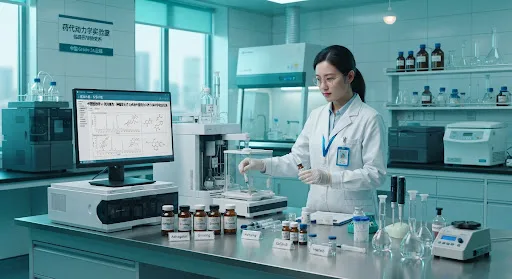
The human liver is the main metabolic site for most modern anti-cancer drugs and for the active molecules of Chinese herbs alike, relying on biotransformation driven by the cytochrome P450 (CYP450) enzyme system — above all CYP3A4, CYP2D6 and CYP1A2. When a patient self-adds complex herbal formulas that have never been through pharmacodynamic evaluation while on Western-medicine treatment, competitive enzyme inhibition or enzyme induction is highly likely.
If the formula contains constituents that strongly inhibit CYP3A4, clearance of targeted drugs such as the EGFR-TKIs third- and first-generation EGFR targeted therapies drops sharply, causing plasma concentrations to spike into the toxic range — potentially fatal bone-marrow failure or acute drug-induced liver injury (DILI).
Conversely, formulas containing St. John's wort extract or other aggressive enzyme-inducing constituents accelerate hepatic metabolism, so expensive targeted anti-cancer drugs are excreted prematurely and steady-state concentrations fall below the effective therapeutic window — directly driving rapid tumor progression and resistance.
Red Line 3: Firmly Refuse "Family Secret Formulas" Without a Licensed Prescription and Unapproved Powdered Herbs
In cross-border medical consultations, we repeatedly see families spending thousands to tens of thousands of US dollars on so-called "miracle powders" and "centuries-old lineage anti-cancer capsules." These black-market preparations carry no approval from the national drug regulatory authority and no licensed physician's prescription — a hidden killer of late-stage cancer patients.
- Illegal overdosing with hidden glucocorticoids (e.g., dexamethasone): patients briefly show a big appetite and seemingly restored energy — in fact a cortisol illusion — before severe infection, massive gastrointestinal bleeding and immune paralysis set in within weeks.
- Heavy metals and pesticide residues far above limits: arsenic, lead and mercury in untested wild-collected herbs often exceed national standards by tens of times, directly destroying the patient's remaining liver and kidney tolerance reserves.
- Definite nephrotoxins such as aristolochic acid: they cause irreversible interstitial renal fibrosis, permanently eliminating any remaining chance of continuing standard chemotherapy.
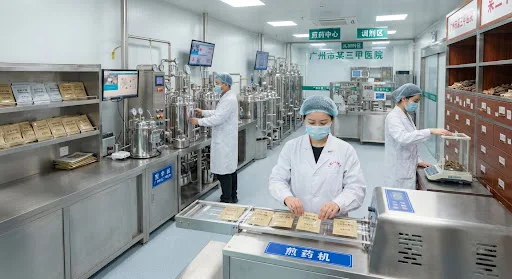
- National TCM raw-slice traceability system: geo-authentic herbs tracked end-to-end by QR code — growing origin, harvest date and heavy-metal/pesticide-residue testing results all electronically verifiable.
- Compliant hospital-formulated preparations (official preparation numbers): double-reviewed by the provincial drug administration and the hospital ethics committee, with decades of real-world clinical evidence behind them.
- HIS e-prescription system archiving: every ingredient is prescribed and signed by a licensed deputy chief physician or above in integrated TCM–Western medicine, leaving a complete legal record.
At Which Clinical Stages Can Evidence-Based TCM Deliver Real Coordinated Value?
Once the folk pseudoscience is set aside, TCM coordination protocols validated by rigorous clinical trials and systematic meta-analyses show irreplaceable value in reducing toxicity and supporting efficacy at three major clinical pain points:
During Chemotherapy & Radiation: Controlling GI Side Effects and Protecting Bone-Marrow Function
Cisplatin- and anthracycline-based regimens readily cause delayed nausea, vomiting and loss of appetite. Alongside standard 5-HT3 receptor antagonists, syndrome-differentiated use of classic formulas that "fortify the spleen, harmonize the stomach and direct rebellious qi downward" (e.g., Modified Wendan Decoction) has reduced unplanned rescue-antiemetic use by up to 34%. For the cliff-edge drops in white blood cells and neutrophils caused by chemotherapy, appropriately applied qi- and blood-supplementing patent TCM medicines during the intervals between G-CSF injections shorten the hematopoietic recovery period and keep the next cycle on schedule.
Managing Targeted-Therapy Hallmark Side Effects: Hand–Foot Syndrome and Acneiform Rash
Anti-angiogenic agents (such as cabozantinib and apatinib) and EGFR inhibitors frequently provoke stubborn hand–foot skin reactions — redness, cracking and severe pain. Experience-based herbal soaks or hospital-formulated ointments such as arnebia (gromwell) root oil from Class-A tertiary centers improve local microcirculation and ease ulcer pain, so patients do not feel forced to reduce their targeted-drug dose on their own out of poor tolerance.
Enhanced Recovery After Surgery (ERAS) for GI Function and Cancer-Related Fatigue (CRF)
After major gastrointestinal, gynecological or thoracic tumor surgery, TCM acupoint application and low-frequency warm moxibustion can bring first spontaneous flatus and defecation forward by an average of 14–22 hours and reduce the risk of postoperative adhesions. For the persistent whole-body exhaustion that lingers for months after chemo-radiation — cancer-related fatigue — syndrome-differentiated TCM treatment has been shown to raise the Karnofsky Performance Score (KPS) and restore basic self-care ability.
How Can Overseas Patients Start Compliant Integrated TCM–Western Care at a Chinese Public Class-A Tertiary Hospital?
To guarantee maximum safety in cross-border care, MedTravel China supports international patients in strictly following an admission coordination protocol of "Western medicine first, Western-led care, MDT joint review."
Step 1: Collect Your Overseas Records & International Pathology-Imaging Pre-Review
Submit your complete overseas discharge summary, pathology biopsy reports and original DICOM imaging discs; rule out contraindications of rapidly progressive disease; and confirm the current first-line Western oncology plan.
Step 2: Admit to the Primary Oncology / Radiation Ward of a Public Class-A Tertiary Hospital
Patients must first be admitted to the responsible Western-medicine specialty ward equipped with emergency, monitoring, surgical and radiation capabilities. Going straight to an independent small clinic without critical-care support is strictly prohibited.
Step 3: Attending Physician Initiates an Integrated TCM–Western Multidisciplinary Consultation (MDT)
Integrative oncology experts at the Class-A tertiary hospital examine the patient at the bedside using the four classic TCM diagnostic methods and, in sync with the Western drug schedule, issue a precisely coordinated formula that enters the hospital's central pharmacy for unified preparation and delivery.
Step 4: Continuous Dynamic Biochemical Monitoring of Liver, Kidneys and Drug Concentrations
Blood biochemistry and electrolytes are strictly drawn on days 3 and 7 of medication. Any fluctuation in metabolic indicators triggers an immediate pause and coordinated adjustment — keeping patient risk at zero.
MedTravel China's clinical team provides authoritative Class-A tertiary pre-screening of overseas records to help you avoid drug-interaction risks.
info Medical information on this site is for general reference only and does not constitute medical advice, diagnosis, or treatment recommendations. Actual care decisions rest with the licensed physicians of the hospital.